Robots have become a prominent part of our modern world, impacting various aspects of life. To truly comprehend their significance, let’s delve into the technology behind robotics and explore their wide-ranging applications.
The Building Blocks of Robotics
At the heart of every robot are key components and technologies:
1. Sensors: Robots rely on sensors to perceive their environment. These sensors can include cameras, LIDAR, ultrasonic sensors, and touch sensors, allowing robots to collect data about their surroundings.
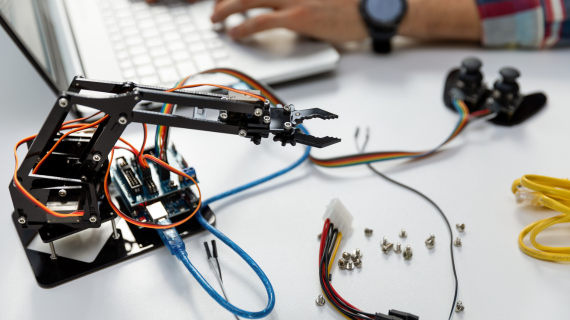
2. Actuators: Actuators are responsible for robot movement. Electric motors, hydraulic systems, and pneumatic systems enable robots to perform tasks with precision.
3. Control Systems: Control systems, often powered by sophisticated algorithms and artificial intelligence, determine how a robot processes sensor data and makes decisions.
4. End Effectors: These are the tools or devices attached to a robot’s arms or manipulators. Grippers, welding torches, and surgical instruments are examples of end effectors tailored to specific tasks.
5. Communication: Robots often communicate with other machines or humans through interfaces, including Wi-Fi, Bluetooth, or specialized protocols.
Applications of Robotics
Robotics finds application across diverse domains:
1. Manufacturing: Industrial robots automate tasks like welding, painting, and assembly in manufacturing plants. They improve precision and efficiency while reducing the risk of workplace accidents.
2. Healthcare: Surgical robots assist surgeons with delicate procedures, while robotic exoskeletons aid rehabilitation and mobility for patients with physical impairments.
3. Agriculture: Autonomous tractors and drones monitor crops, apply fertilizers, and perform harvesting tasks, enhancing crop yields and sustainability.
4. Space Exploration: Robots like the Mars rovers conduct scientific experiments and collect data in harsh extraterrestrial environments.
5. Consumer Electronics: Robot vacuum cleaners and personal assistants simplify household chores and provide voice-activated convenience.
6. Defense and Security: Unmanned aerial vehicles (UAVs) and bomb disposal robots enhance security and military operations.
7. Education: Robotics education programs teach students problem-solving, programming, and engineering skills, fostering innovation.
8. Research: Robots are instrumental in scientific research, exploring environments such as the deep sea, disaster zones, and hazardous materials sites.
Challenges and Future Trends
While the potential of robotics is vast, challenges remain. Ensuring the safety of robots, addressing ethical concerns, and developing robust AI systems are ongoing endeavors.
The future of robotics holds exciting possibilities. Advancements in AI, machine learning, and human-robot interaction will lead to more versatile and capable robots. These robots will increasingly collaborate with humans in diverse settings, from healthcare to space exploration, shaping a world where automation and human ingenuity work hand in hand.
Conclusion
Understanding robotics involves appreciating the intricate technologies that power robots and recognizing their multifaceted applications. As robotics continues to evolve, it promises to revolutionize industries, improve lives, and open up new frontiers in exploration and innovation.